
A plumbing and HVAC owner told us this month that he was paying $152 for every exclusive lead from a pay-per-lead service. One of those leads came from someone who clicked a random link on a social media marketplace and could not remember the company’s name when the owner called back. That is $152 for a conversation that started with “who is this?”
He is not careless with money. He runs a lean shop, answers inquiries within seconds, and does good work. The math was broken before he ever picked up the phone, and the same math is quietly breaking budgets for local service businesses everywhere. So let’s actually do it.
How do pay-per-lead services actually work?
Lead marketplaces and pay-per-lead companies sell homeowner inquiries to service businesses. The homeowner fills out one form describing their project. The platform then sells that inquiry, either to several businesses at once (a shared lead) or to one business (an exclusive lead). Shared leads for home services often run somewhere between $15 and $80 each. Exclusive leads commonly run $80 to $200 or more, depending on the trade and the job type.
The model has a built-in tension worth understanding: the platform gets paid when it sells the inquiry, not when you win the job. Whether that homeowner ever becomes your customer is your problem, not theirs. The platform’s incentive is volume. Yours is quality. Those are different goals, and it shows in the results.
What does a bought lead really cost?
The sticker price is not the cost. The cost is the price divided by how many of those leads become paying customers.
Take a shared lead at $40. It typically goes to three to five businesses at the same moment, and the homeowner often picks whoever answers first or quotes lowest. If you close one in ten shared leads, which is a realistic rate for many trades, your real cost per customer is $400. On an exclusive lead at $152, closing one in three still puts you at $456 per customer, and one in three is optimistic when the person on the other end barely remembers filling out the form.
“Cold prospects, people that just want the price and then kind of move on.” That is how one owner described his marketplace leads to us. He was answering within seconds and still losing them.
Now stack that against the jobs. If your average ticket is $350 for a service call, a $400 customer acquisition cost loses money on the first visit and only pays off if that customer comes back. The math starts to work on installs and big projects, but those are exactly the leads every competitor on the platform is fighting hardest to win.
| Bought leads | Earned leads | |
|---|---|---|
| Who else gets them | Shared leads go to several competitors at once | They searched, found you, and contacted you directly |
| Cost over time | Same price for every lead, forever | Cost per lead falls as rankings and reviews build |
| What you own | Nothing. Stop paying, leads stop | The website, content, rankings, and reviews stay yours |
| Trust at first contact | They filled out a form, often price-shopping | They read your reviews and chose to call you |
| AI search visibility | None. The platform gets recommended, not you | Your business can be the one AI tools name |
Why do bought leads convert so poorly?
Three reasons come up over and over when owners describe their experience.
First, the race. A shared lead is a starting gun. The homeowner hears from four businesses within minutes, and the conversation becomes a price auction between strangers. Second, intent. Someone who fills out a one-size-fits-all form on a platform is often earlier in their decision, or just curious what things cost. Someone who searched “water heater replacement near me,” read reviews, and called a specific company has already done their choosing. Third, trust. The bought lead knows nothing about you when the phone rings. You start every conversation from zero, which is a hard place to defend a fair price from.
There is one more cost owners mention that never shows up on an invoice. Signing up for lead platforms tends to put your number on lists. One owner told us he now gets so many marketing sales calls that he declines unknown numbers on sight, which is a rough habit to need in a business where unknown numbers are customers.
When does buying leads actually make sense?
Honestly, sometimes it does. A brand-new business with no reviews, no rankings, and an empty schedule needs work this week, and a marketplace can provide it while nothing else can yet. A seasonal slow stretch can be worth patching with paid leads. Some owners keep a small marketplace budget purely to fill gaps, treat every won job as a review opportunity, and accept the margin hit as the price of a full calendar.
The trouble starts when renting leads becomes the whole plan. Every month resets to zero. Five years in, the business that relied on marketplaces is still paying full price for every customer, while a competitor who spent those years building their own presence now gets calls that cost nothing.
What does earning leads look like instead?
Earned leads come from assets you build once and improve continuously: a website with real pages for each service you offer, a Google Business Profile with steady reviews, content that answers what your customers actually search, and listings that agree about your name, address, and phone number everywhere they appear. None of it produces a lead on day one. All of it compounds.
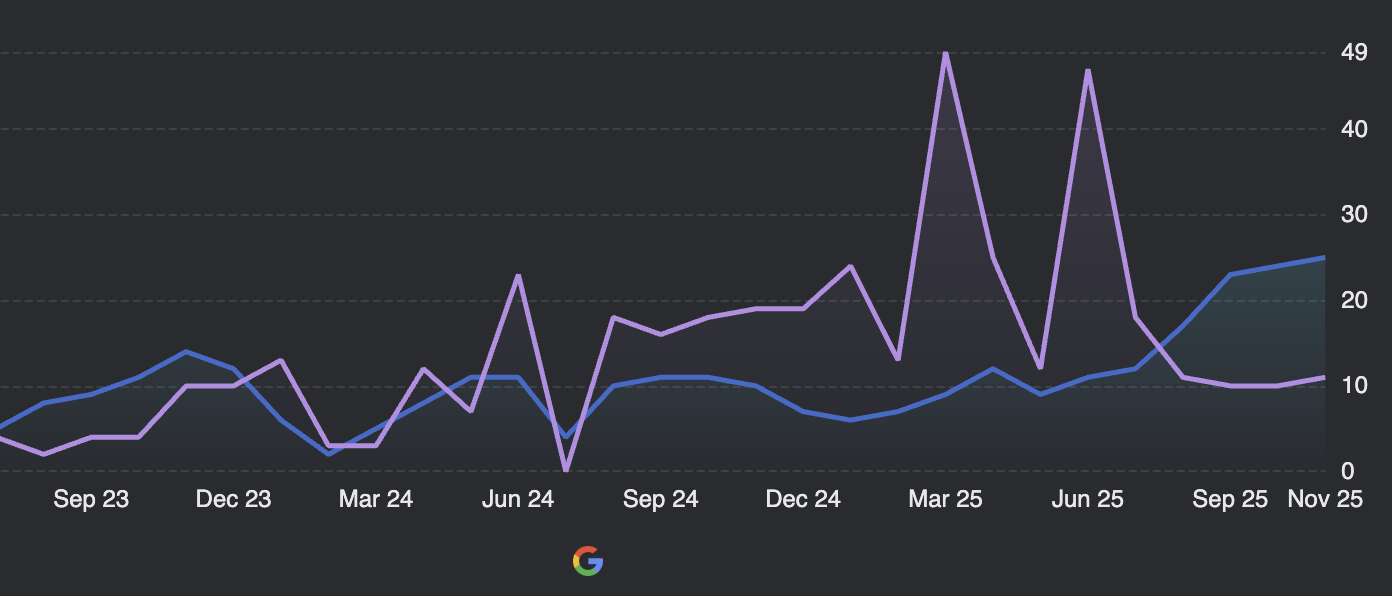
Organic keyword and traffic growth for one of our electrical clients. Every one of these visits arrived without a per-lead fee.
The pattern we see with local service clients is consistent. The early months are foundation work with modest visible results. Then rankings take hold in the neighborhoods closest to you, reviews accumulate, and the phone starts ringing from people who already picked you. From that point forward each earned lead makes the next one cheaper, because the same pages and reviews keep working without new spend. We wrote more about how that flywheel gets built on our local SEO services page, and reviews specifically in our guide to getting more five-star reviews.
How does AI search change this math?
More homeowners now skip the list of links entirely and ask an AI assistant a question like “who should I call for furnace repair near me.” The answer names two or three businesses. There is no page two, and there is no ad slot to buy your way into that sentence.
AI tools build those answers from the same raw material that drives local rankings: your website’s content, your reviews, consistent business data across the web, and mentions from sources the AI trusts. A business that rents all its leads is invisible in that answer. A business that spent a year earning its presence can be the one named. As AI answers take a bigger share of searches, the gap between renting and owning stops being a cost difference and becomes a visibility difference.
How do you switch without a dry spell?
Nobody should cancel their lead sources the day they start building. The transition that works looks like this: keep whatever paid sources are producing, start the foundation work now, and make sure every lead you already get is captured properly, because missed calls and slow follow-up waste bought and earned leads alike. As organic leads arrive, taper the per-lead spend rather than cutting it in one move. Most owners find the marketplace budget shrinks on its own once they compare the cost of each channel side by side. Our guide to measuring marketing ROI covers how to run that comparison honestly.
Where we fit: we build the earned side for local service businesses. One program covers the website, search and AI visibility, reviews, and the lead capture system, priced openly on our pricing page. Month to month, and everything we build belongs to you.
Frequently Asked Questions About Lead Generation
Are exclusive leads worth the higher price?
Sometimes, for high-ticket work. An exclusive lead removes the race against competitors, but it does not change the homeowner’s intent or their trust in you, so close rates still disappoint many owners. Run the math with your real close rate and average ticket before committing to a monthly package.
How long does it take for earned leads to replace bought ones?
It depends on your market, your starting point, and how much ground there is to make up. Lead capture improvements pay off in the first weeks. Search visibility typically shows meaningful movement over several months and keeps compounding after that. Businesses in less competitive markets move faster than ones facing entrenched regional competitors.
Can I just run Google Ads instead of buying marketplace leads?
Ads are a step up from marketplaces because the click comes to your website and your brand rather than a shared form. But in competitive trades a single click can cost $30 to $60 before anyone becomes a lead, so ads work best on top of a solid organic foundation, aimed at your highest-value jobs, rather than as a replacement for one rented channel with another.
Do lead platforms hurt my own marketing?
Not directly. But every dollar spent renting leads is a dollar not spent building assets, and platform profiles can outrank a weak business website for your own searches. The stronger your own presence gets, the less leverage any platform has over your month.
If you want to know what earning your leads would look like in your market, book a discovery call. We will tell you honestly whether the math works for your situation, including the cases where keeping some paid lead flow makes sense.